

If you’ve ever looked at the ingredient list on one of my cream products, you’ve probably seen ‘fruit tallow’ in the description. It’s in about 90% of my creams, and it’s my favourite ingredient. Once you know its story, I think you’ll understand why.
a berry like no other
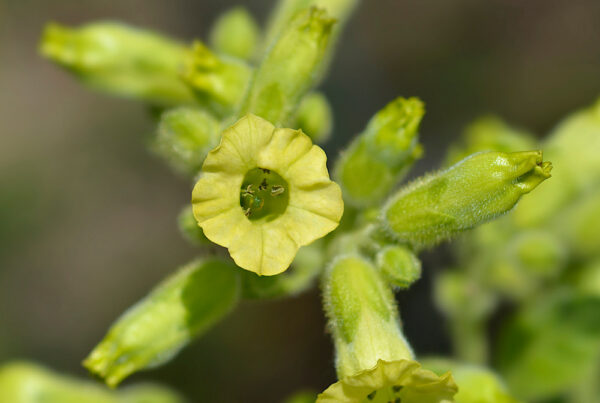
Take a look at the photo above. These tiny berries grow on wild myrica shrubs high in the mountains of Colombia, at elevations of roughly 1,700 to 3,900 metres. Each one is wrapped in its own natural coating, a pale, waxy layer the plant makes on the outside of the fruit.
That’s unusual. Most plants store their oils inside their seeds, like the oil in an olive or the butter in a shea nut. Myrica does the opposite: it builds its fat on the surface of the fruit, and that coating can make up as much as 29% of the fresh berry’s weight. Researchers describe its makeup as “striking,” because no other plant is known to store fat this way.
why i call it fruit tallow
Myrica is usually sold as a “wax,” but chemically it isn’t a true wax at all. True waxes, like beeswax, are made of long-chain esters. Myrica is made of glycerides, the same family of molecules found in animal tallow and plant butters. One botanist described it as “not a true wax, but a vegetable tallow extracted from the surface of the fruits.”
Even more interesting, its fats are completely saturated, made almost entirely of myristic and palmitic acids, which are also major fats in traditional tallow.
So you get the richness, structure, and skin-loving feel people love about tallow, with no animals involved. It’s tallow that grows on trees.
a little history
Myrica has been doing tallow’s job for centuries. When early settlers arrived in North America, cattle were scarce, so animal tallow for candles was hard to come by. Families discovered that boiling bayberries (a close cousin of our Colombian myrica) in water and skimming the fat off the surface gave them a candle that burned cleanly and smelled beautiful. Tallow candles, by comparison, smoked and smelled.
Amazingly, the method used to collect the outer fatty layer today is almost the same: berries are washed, gently simmered in water, and the fat that rises to the surface is skimmed and filtered.
unrefined, the way nature made it
There are two main kinds of myrica wax on the market:
-
Refined or bleached: filtered or treated until it’s pale and nearly scentless.
-
Unrefined: keeps its natural soft green colour and gentle herbal scent.
I have carefully sourced wild-harvested, unprocessed myrica. It is extracted with only water and filtered without chemical bleaching. Yes, it costs more. A lot more than the waxes and fillers most cosmetics rely on. But to me it’s worth every penny, because it’s what makes my formulas unlike anything else out there.
what it does in your makeup
This is where fruit tallow really shines (or rather, doesn’t):
-
A soft, powdery finish. Because its fats are fully saturated, fruit tallow sets into a dry, velvety film instead of staying slick or greasy. That’s why our cream products melt onto skin and then settle into a soft, almost powder-like finish.
-
Gentle structure. It gives creams a smooth glide and a balm that holds its shape without feeling heavy or waxy.
-
Natural stability. With no double bonds in its fatty acids, myrica is very resistant to going rancid, which helps keep formulas fresh.
-
100% plant-based. It’s a plant based alternative to beeswax, any type of wax, and animal tallow.
a little bird knows best
One of my favourite myrica facts: the yellow-rumped warbler is the only warbler that can digest the waxy coating on bayberries. That special ability lets it spend winter much farther north than any of its relatives, living off this rich little fruit when other food is scarce. If it’s good enough to get a songbird through winter, I’d say it’s pretty special.
a plant that gives back
Myrica is also a generous plant. It’s a nitrogen fixer: with help from microbes in its roots, it pulls nitrogen from the air and enriches the soil around it, allowing it to thrive in poor, rocky ground where many other plants struggle.
why it matters to me
When I started formulating, I wanted cream makeup that felt different. Not greasy, not heavy, not built on the same handful of ingredients everyone else uses. Fruit tallow gave me that. It’s the heart of almost every cream I make, and it’s the reason my textures feel the way they do.
So next time you swirl your finger into one of my creams and feel that soft, velvety finish, you’ll know there’s a tiny Colombian berry behind it.
Fruit tallow: the tallow that grows on trees.
[shop my fruit tallow based makeup → link]